What Is Wrong With People!?
Use ← → or the buttons to move between pages. P toggles presentation mode.
“What is wrong with people?” is a joke. It is also a real question.
Almost everyone has muttered it in traffic, in a comment section, or at a family dinner. Behind the eye-roll sits a serious worry: that people today think less for themselves, take less responsibility, and drift through life on autopilot, while previous generations were tougher, freer, and more sure of what they were for.
This piece takes that worry seriously enough to test it. The central question is simple to say and hard to answer:
Are human beings today living more independent, purposeful, and personally fulfilling lives, or are modern social structures, cultural expectations, and everyday habits encouraging conformity, dependency, and passive existence?The central question of this investigation
We will look at it from five distances: the deep past, about a hundred years ago, thirty to fifty years ago, the smartphone decade, and the years since 2020. We will meet the philosophers who argued about it and the researchers who tried to measure it. Then we will hold the popular assumptions up to the data, one at a time.
The goal is not to prove that earlier generations were better, or that today is inevitable progress. People have been sure the next generation is worse for at least two thousand years, and they have usually been wrong in ways worth understanding.
(Spoiler: the answer is not “everyone except me.”)
How to read the labels
Something measured: a survey, a census count, a study result. Every number has a numbered source you can click.
A philosophical or scholarly reading of what things mean. Reasonable people can disagree.
Credible experts disagree, the data are thin, or the claim is a forecast rather than a finding.
Our own synthesis or judgment, clearly marked so you can weigh it separately from the evidence.
A note on scope
Most measured trends here are from the United States, where the longest-running surveys exist. Where global data exist, they are flagged. Small numbered chips like · open the source.A two-minute self-audit
Eight statements. No score, no judgment, nothing sent anywhere: your answers stay in this browser so you can compare them at the end.
These statements are not a validated psychological test. They borrow the themes researchers use: autonomy, purpose, a sense of control, belonging, and the ability to act against the crowd. Read them as a mirror, not a measurement.
Where each statement comes from
The long view: five distances from today
Before asking whether people are “worse” now, it helps to know what “before” looked like. For most of history the question “who do you want to be?” barely made sense. That is the starting point.
Work, family, faith and status were mostly inherited.
Choice expanded enormously, and so did comfort.
The need to belong, and the complaint about the young.
Five distances from today
Each layer changes what “normal” meant. Click through to the pages that cover it; no time machine required.
Life was local, short and mostly agricultural. Identity was given by family, village, faith and trade. Philosophers from Aristotle to Kant argued about what a good and self-directed life would even be. The Enlightenment made the radical bet that ordinary people could and should think for themselves.
Depression, war and then a postwar boom. Life expectancy jumped, people married younger than at any time on record, and thinkers worried loudly about the “organization man” and the “lonely crowd.” The famous conformity experiments were born in this era’s anxieties.
Trust in government fell from its 1960s peak. Commentators named a “Me Decade.” Parents began choosing more distinctive names, and Robert Putnam warned that Americans were “bowling alone.” Yet reported happiness barely moved for decades.
Smartphones went from novelty to near-universal. Time alone rose, in-person time with friends fell, and teen mental-health measures worsened from about 2013. The cause is hotly debated.
A sharp break in daily routines: work, school and social life moved home. Did things “slip faster than normal” afterwards? Some measures say yes, some say no, and some are too new to judge.
For most of history, the self came pre-assigned

Picture a life in which your trade, your faith, your spouse and your social rank were largely settled before you could talk. For most people in most of recorded history, that was simply how life worked.
As late as 1900, 41% of the U.S. workforce worked in agriculture; by 2000 it was 1.9% ·. In 1900 American life expectancy at birth was 47.3 years; in 2024 it reached a record 79.0 ··. In 1940 only 4.6% of adults had a college degree ·; today about 43% of 25- to 54-year-olds do ·.
The philosopher Charles Taylor describes the modern shift as the rise of an “ethic of authenticity”: the idea that each of us has an original way of being human and should find it, rather than accept a role from outside ··. That idea is so normal now that it is easy to forget how new and how demanding it is.
What was harder
Survival. Disease, famine and childbirth killed early and often. Choice was a luxury of the few.
What was easier
Knowing where you belonged. Duties came with a script, and so did a community that would notice if you failed them.
The trade-off
Modern life swapped a fixed script for an open question. Freedom and the burden of choosing arrived together, a theme Erich Fromm would make famous.
“Kids these days”: a complaint at least 2,700 years old
Grumbling about the youth may be humanity’s longest-running tradition, narrowly ahead of grumbling about the weather.
Some of the most-shared “ancient complaints about young people” are real. Some are invented. Decide for each one, then check.
Why the complaint never dies. In 2019, Protzko and Schooler found that adults judge “kids these days” as especially lacking in the very traits the adults themselves excel at: well-read adults think kids read less, authoritarian adults think kids are less respectful. Part of the cause is memory: we project our present selves onto our younger selves ·.
The illusion of moral decline. Mastroianni and Gilbert analyzed surveys from 60+ nations going back to 1949. People everywhere believe morality is declining. Yet when the same surveys asked people to rate the morality of those around them now, the ratings did not fall over time ·.
That does not mean nothing changes; plenty has, and the rest of this piece measures it. It means a feeling of decline is not evidence of decline. The useful question is not “are people worse?” but “which specific things changed, by how much, and why?”
The Enlightenment bet: ordinary people can think for themselves
Enlightenment is man’s emergence from his self-imposed immaturity. Immaturity is the inability to use one’s understanding without guidance from another… Sapere Aude! Have courage to use your own understanding!Immanuel Kant, “What is Enlightenment?” (1784), trans. Ted Humphrey ·
Kant’s essay is usually remembered as a battle cry. It is also a surprisingly modern diagnosis of why people don’t think for themselves. His answer was not stupidity. It was convenience:
It is so easy to be immature. If I have a book to serve as my understanding, a pastor to serve as my conscience, a physician to determine my diet for me, and so on, I need not exert myself at all. I need not think, if only I can pay.Kant, 1784 ·
Swap “book” for “search engine,” “pastor” for “influencer,” and “physician” for “wellness app,” and Kant could be writing in 2026. The worry that comfort breeds dependence is not a modern discovery; it was built into the founding argument for modern freedom.
The bet, in three moves
Notice that each step moves the threat closer to home: from the state, to our own laziness, to our neighbors. That is roughly the path this piece follows into the present.
Industrialization: the clock replaces the season


Factories brought wages, cities and anonymity. They also brought a new kind of work: repetitive, timed and directed by someone else. Many of the modern worries about “passive” people begin here.
Life expectancy at birth, United States, 1900–2024
Depression, war, boom, and a panic about conformity
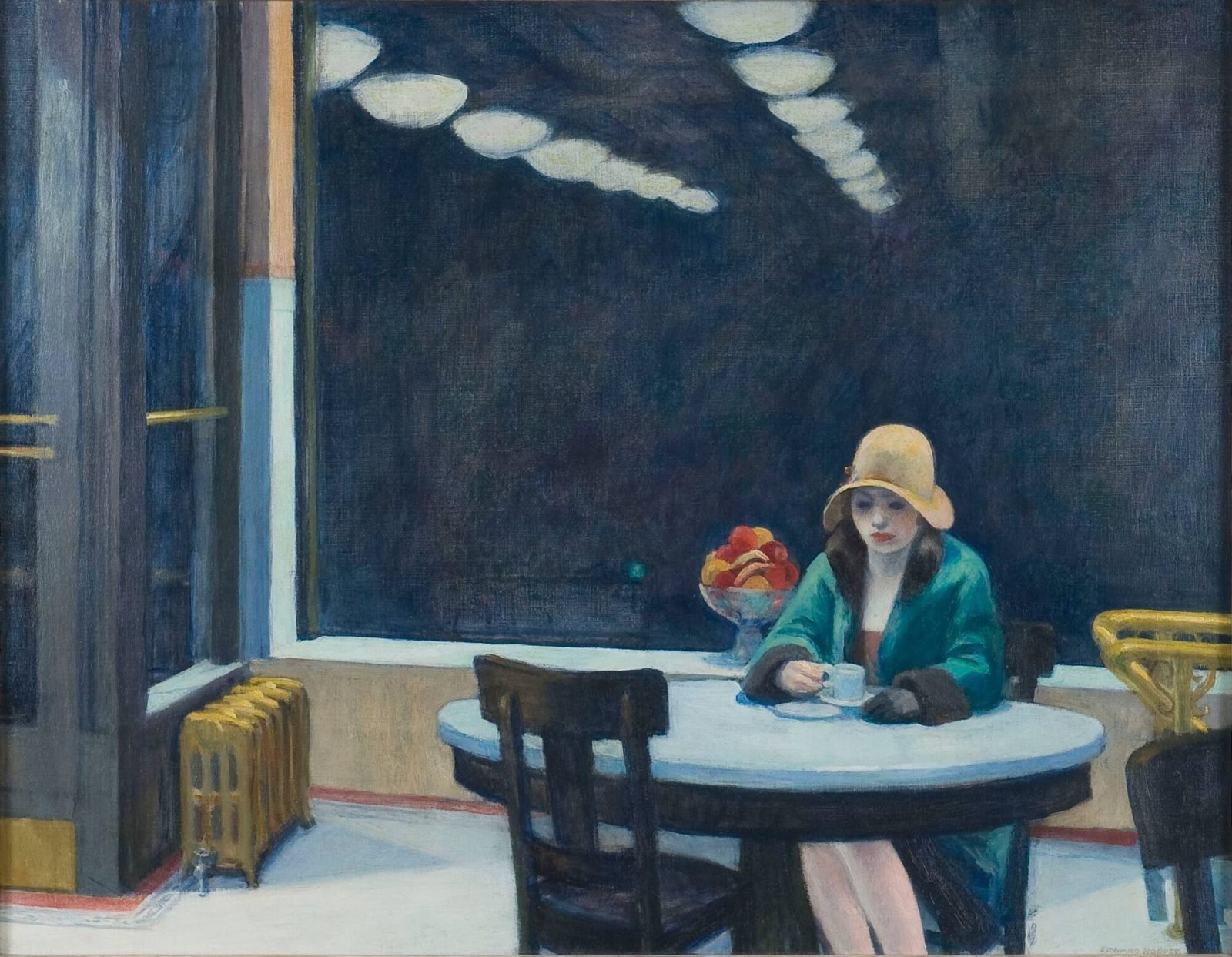
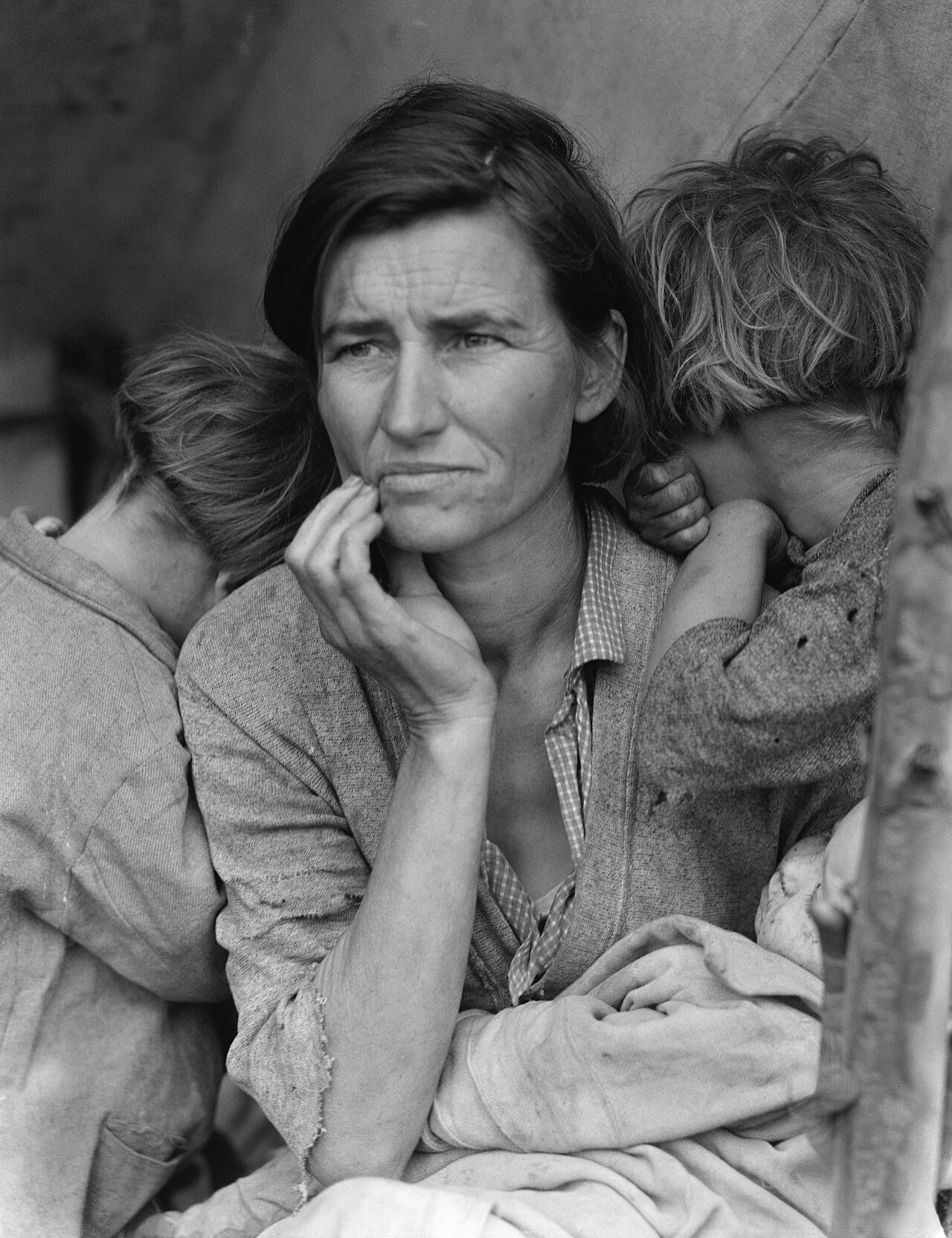
Median age at first marriage, 1890–2025
The mid-century is often remembered as the era of rugged individuals. People living through it were worried about the opposite.
In 1950 the sociologist David Riesman described Americans as increasingly “other-directed,” steering by the signals of peers and media rather than an inner compass ·. In 1956 William H. Whyte’s bestseller The Organization Man described white-collar workers who had traded independence for belonging to the company ·.
Men married at a median age of 22.5 and women at 20.1 in 1956, the lowest ever recorded. In 1890 it had been 26.1 and 22.0; by 2025 it was 30.8 and 28.4 ·.
The “Me Decade,” the trust collapse, and a surprising constant
Trust the federal government to do what is right “just about always” or “most of the time”
Trust in Washington fell from 77% in 1964 to under a third by 1979–80, briefly rebounded in the 1980s and after 9/11, and reached 17% in Pew’s September 2025 survey ·.
In 1976 the journalist Tom Wolfe named the 1970s the “Me Decade”: a mass turn toward self-improvement and self-exploration ·. In 1995 the political scientist Robert Putnam argued that Americans were joining less and “bowling alone” ·.
The surprising constant. Through all of it, the share of Americans calling themselves “very happy” in the General Social Survey barely moved, staying between about 28% and 36% in every survey from 1972 to 2018 ·. The big drop came later; see the happiness page.
The smartphone decade
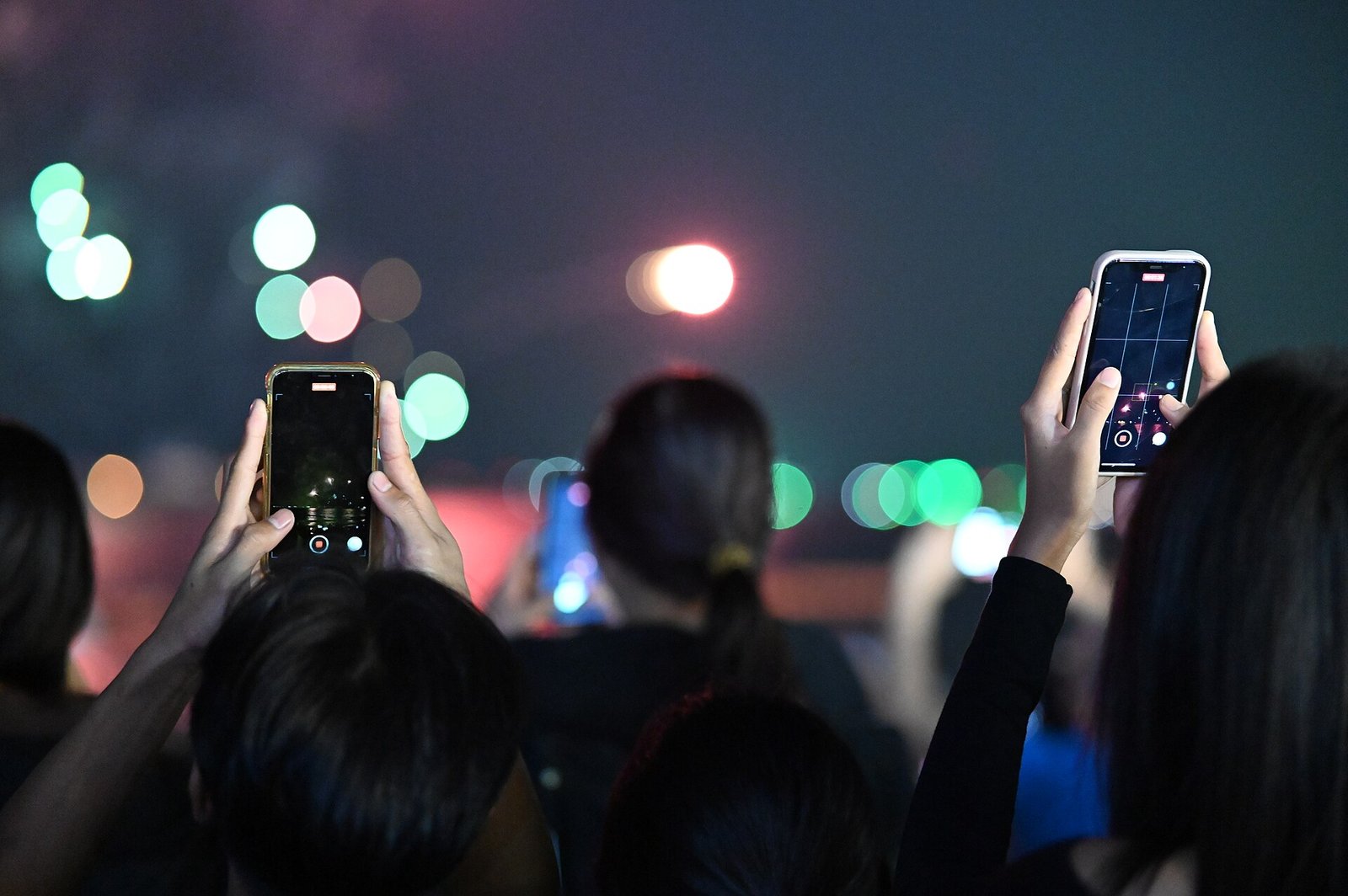
Several social measures that had been drifting for decades turned sharply in the 2010s, especially for the young. Young Americans aged 15–29 spent roughly 45% more time alone in 2023 than in 2010 ·.
Whether smartphones and social media caused the teen mental-health decline is one of the liveliest fights in social science. Jonathan Haidt argues yes ·; the psychologist Candice Odgers argues the evidence shows correlation, not proven causation ·. Both sides are covered on the teens page.
Nine thinkers, one argument across 2,400 years
Philosophers rarely agree, but on this subject they form a surprisingly coherent conversation: what it means to live a self-directed life, why it is hard, and what gets in the way.
Aristotle: a good life is practiced, not found.
Mill, Kierkegaard, Nietzsche, Fromm: beware the crowd.
Frankl, Bandura, Taylor: meaning, agency, and authenticity done right.
The thinkers at a glance
Nine people who spent their lives worrying about how the rest of us live ours. Click any thinker. Each page has a short biography, the core idea, a verified quotation, a video, and what the idea suggests about life now.
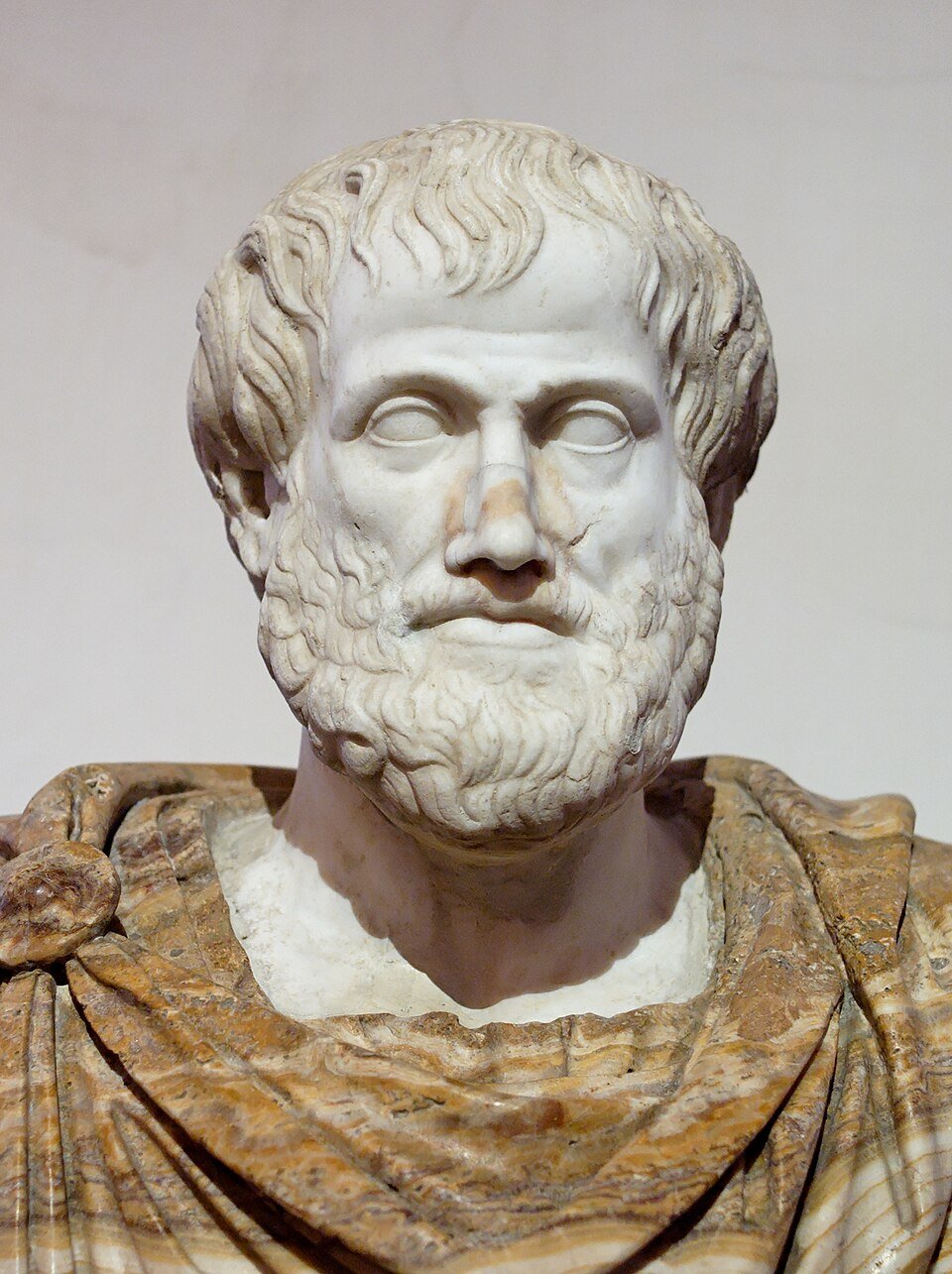
Aristotle
Flourishing is built through habit
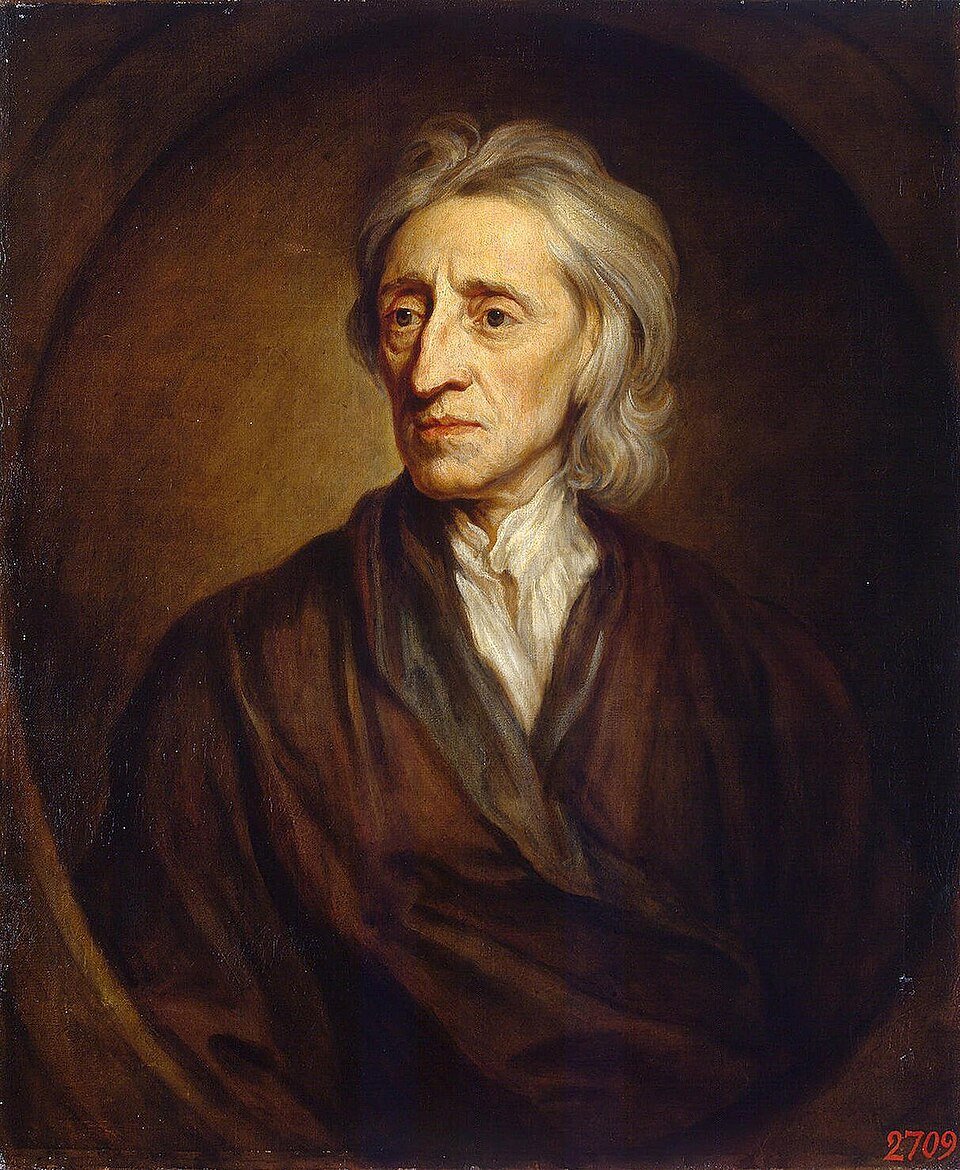
John Locke
You own yourself, and answer for yourself
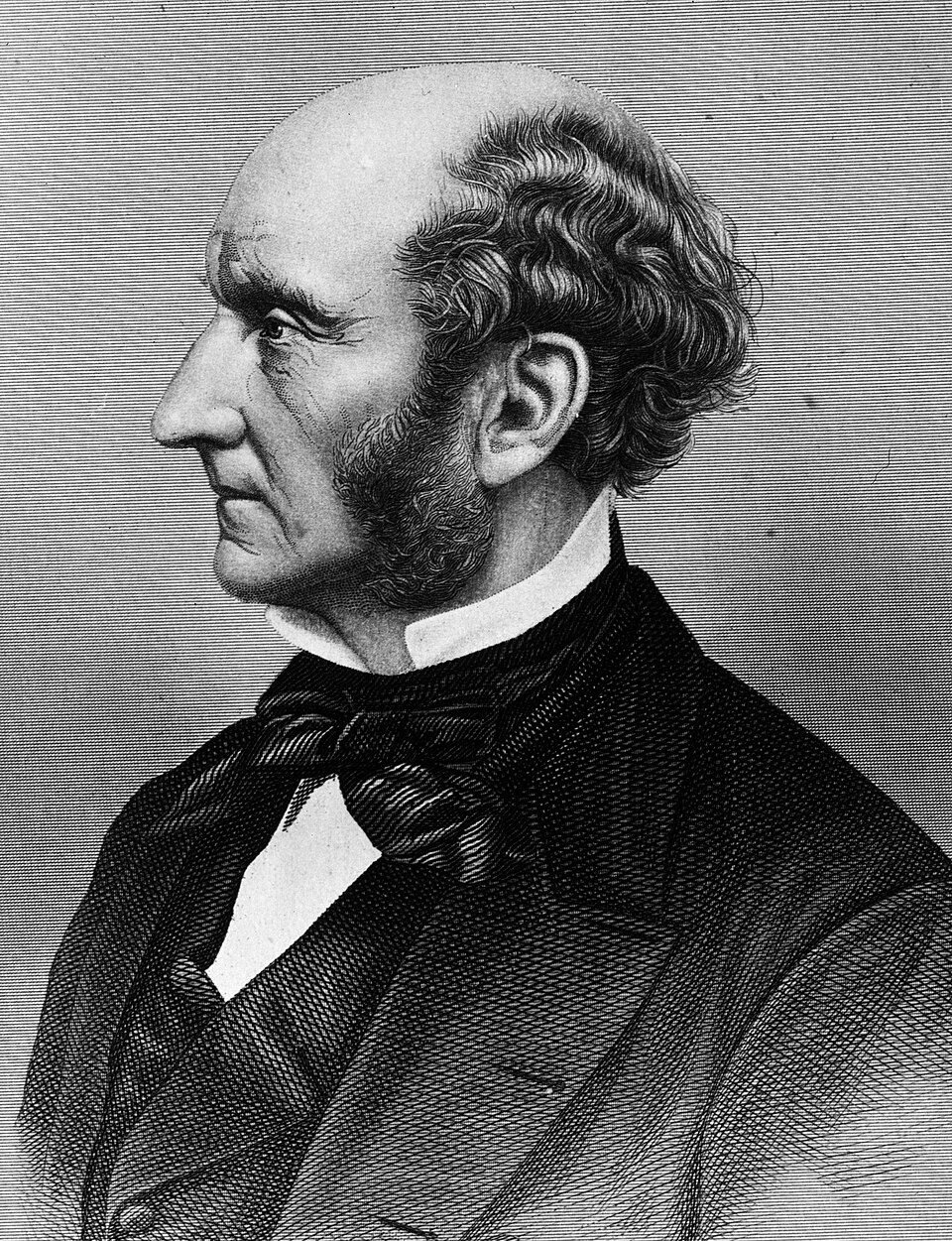
John Stuart Mill
Custom is the quiet tyrant
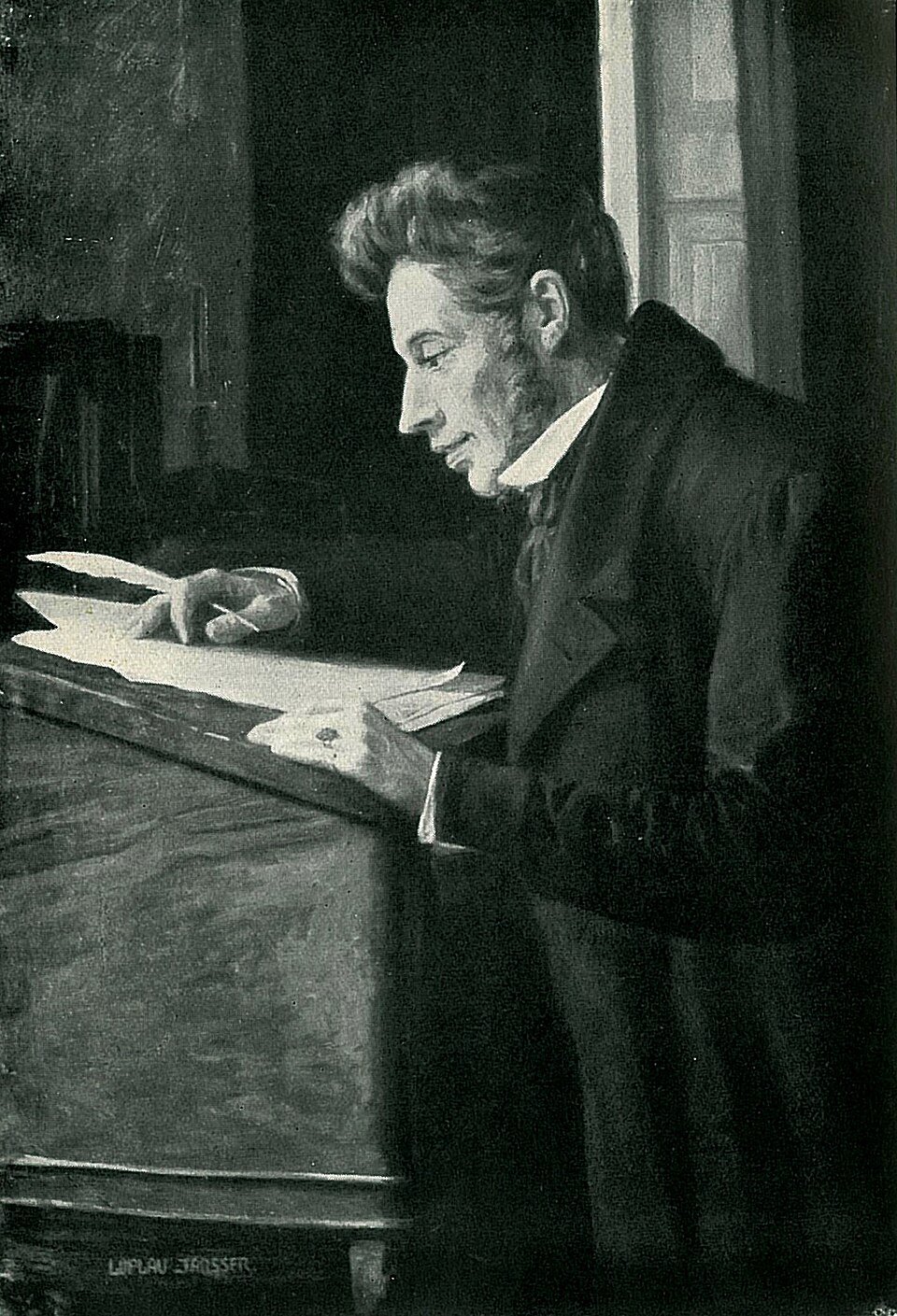
Søren Kierkegaard
The crowd is untruth
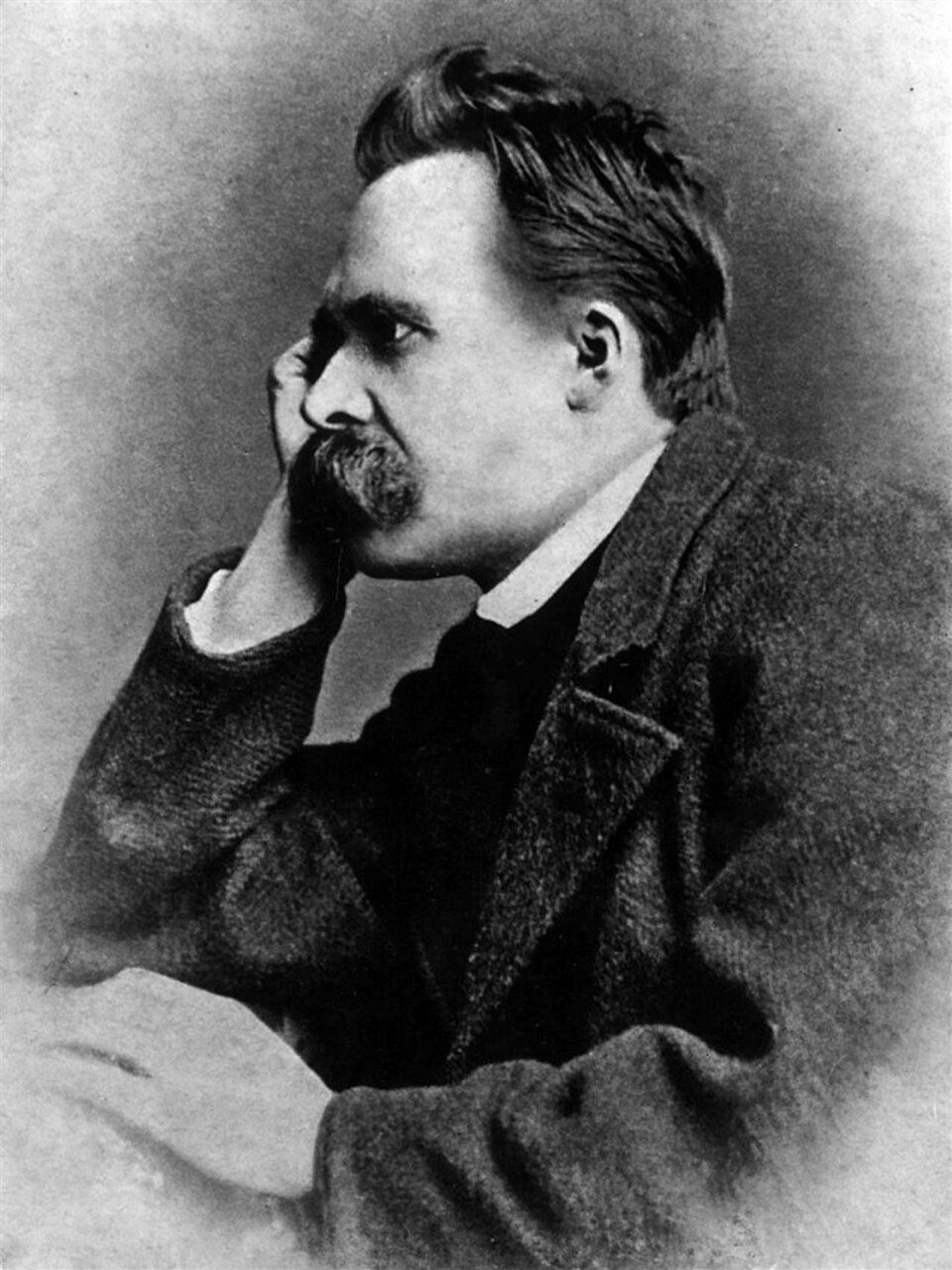
Friedrich Nietzsche
Become who you are
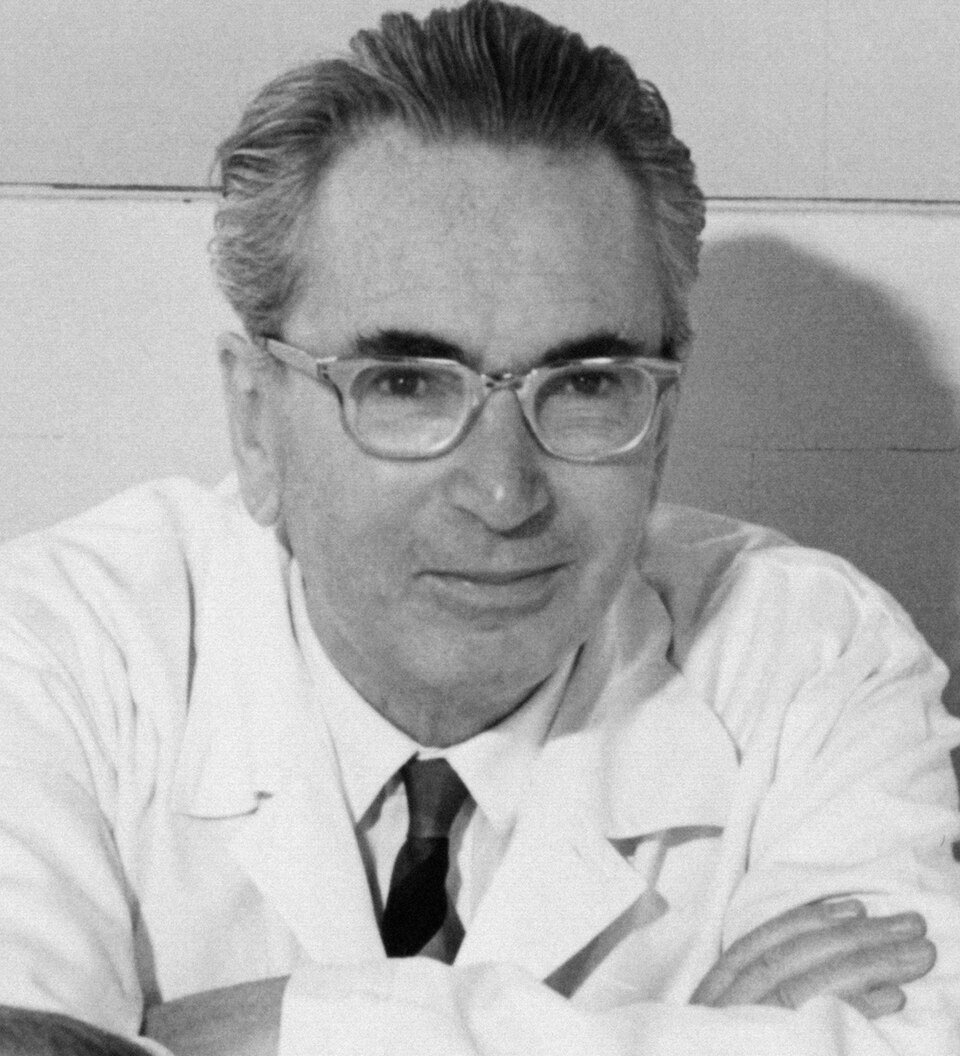
Viktor Frankl
Meaning is the last freedom

Erich Fromm
Freedom can feel like a burden

Albert Bandura
Belief in your own agency shapes what you attempt

Charles Taylor
Authenticity needs a horizon
Read in order, the nine form a rough arc. Aristotle says a good life is a practice. Locke and Mill make the individual the owner and author of that practice. Kierkegaard, Nietzsche and Fromm warn that most people hand authorship back to the crowd. Frankl, Bandura and Taylor, writing after the 20th century’s disasters, ask how to recover it.
As it is not one swallow or one fine day that makes a spring, so it is not one day or a short time that makes a man blessed and happy.Aristotle, Nicomachean Ethics I.7, trans. D. P. Chase ·
Aristotle
- Studied ~20 years at Plato’s Academy
- Tutored the young Alexander the Great
- Founded the Lyceum in Athens
- Nicomachean Ethics
Aristotle called the highest human good eudaimonia, usually translated as happiness but closer to “flourishing.” It is an activity, not a mood: living well over a whole life, using reason, among friends, as a citizen. Virtue sits between extremes (courage between cowardice and recklessness) and is acquired the way skills are, by doing ··.
He also thought humans are by nature social and political animals. On his account, a flourishing life cannot be lived alone.
Then: Character was formed inside a tight community that watched, judged and trained you. Habit was mostly social.
Now: Our habits are increasingly designed by others, through feeds, notifications and defaults. Aristotle would ask the uncomfortable question: whose character are your daily repetitions building?
Further reading: Stanford Encyclopedia of Philosophy, “Aristotle’s Ethics” ·. The popular line “we are what we repeatedly do” is not his.
Every man has a property in his own person: this no body has any right to but himself.Locke, Second Treatise of Government, §27 (1689) ·
John Locke
- Trained as a physician
- An Essay Concerning Human Understanding (1689)
- Two Treatises of Government (1689)
- Lived in exile in Holland, 1683–89
Locke argued that the mind starts out like “white paper” and is filled by experience, so who we become depends heavily on what we are exposed to and what we do with it. In politics he argued that government is legitimate only by consent, because individuals are, first, their own ··.
He also tied personal identity to consciousness and memory: you are the same person to the extent you can own your past actions. That makes the self something you are accountable for, not just something that happens to you ·.
Then: Self-ownership was a radical claim against kings, lords and state churches that assumed they had rights over your body, labor and conscience.
Now: The outside claims on us today are softer: employers, platforms, algorithms. Locke’s question still applies. If you own yourself, who is currently making most of your decisions?
Further reading: SEP, “Locke’s Political Philosophy” ·.
He who lets the world, or his own portion of it, choose his plan of life for him, has no need of any other faculty than the ape-like one of imitation.Mill, On Liberty, ch. 3 (1859) ·
John Stuart Mill
- Learned Greek at age three
- Suffered a “mental crisis” at twenty
- On Liberty (1859), which he called a joint work with Harriet Taylor Mill
- Member of Parliament, 1865–68
Mill’s father raised him as an intellectual experiment, and at twenty he fell into a depression he later linked partly to an education that had trained his reasoning while neglecting his feelings. On Liberty argues that society should leave people free to run “experiments of living,” because individuality is a source of both happiness and progress ··.
His sharpest target was social pressure, which he thought could be more oppressive than government because “it leaves fewer means of escape.”
Human nature is not a machine to be built after a model, and set to do exactly the work prescribed for it, but a tree, which requires to grow and develop itself on all sides.Mill, On Liberty, ch. 3 ·
Then: Mill wrote when village gossip, church and class could ruin anyone who lived differently.
Now: Today you can find a community for almost any way of life, which is a Millian victory. But online communities can enforce their own customs as fiercely as any village.
Further reading: SEP, “John Stuart Mill” ·.
The crowd is untruth.Kierkegaard, “On the Dedication to ‘That Single Individual’,” trans. Bellinger ·
Søren Kierkegaard
- Wrote under many pseudonyms
- Either/Or (1843)
- The Sickness Unto Death (1849)
- Often called the first existentialist
Kierkegaard spent much of his life walking Copenhagen, talking to everyone and watching how people disappeared into roles, opinions and “the public.” For him the deepest task was to become a single individual who chooses and answers for their own life, rather than living by what “one” does ·.
He was scathing about crowds: not because people are stupid, but because a crowd dissolves responsibility. In his words, a crowd “either renders the single individual wholly unrepentant and irresponsible, or weakens his responsibility by making it a fraction of his decision” ·.
The greatest danger, that of losing one’s own self, may pass off as quietly as if it were nothing.Kierkegaard, The Sickness Unto Death (1849), trans. Lowrie ·
Then: The crowd meant the press, the market square and the coffee house.
Now: A comment section or a trending topic is the purest crowd ever invented: anonymous, instant, and with responsibility split a million ways.
Further reading: SEP, “Søren Kierkegaard” ·.
If a man knows the wherefore of his existence, then the manner of it can take care of itself.Nietzsche, Twilight of the Idols, “Maxims and Arrows” §12 (1889), trans. Ludovici ·
Friedrich Nietzsche
- Professor at Basel at 24
- Left teaching through illness in 1879
- The Gay Science (1882)
- Mental collapse in Turin, 1889
Nietzsche thought most people adopt the values of their culture without examining them, a “herd” morality that prizes comfort and sameness. The alternative is not to do whatever you like but to create and live by values you have genuinely made your own, and to affirm your life fully ·.
Thou shalt become what thou art.Nietzsche, The Gay Science §270, trans. Common ·
A note on a famous line: “He who has a why to live can bear almost any how” is a looser rendering of the same maxim, made famous by Viktor Frankl, who quotes it in Man’s Search for Meaning. The Ludovici translation is quoted at left.
Then: The herd was church, nation and bourgeois respectability.
Now: Today’s herd is less about obedience and more about imitation: shared aesthetics, trending opinions, borrowed goals. Nietzsche would ask whether “being yourself” has itself become a template.
Further reading: SEP, “Friedrich Nietzsche” ·.
Everything can be taken from a man but one thing: the last of the human freedoms—to choose one’s attitude in any given set of circumstances, to choose one’s own way.Frankl, Man’s Search for Meaning ·
Viktor Frankl
- Psychiatrist and neurologist
- Survived Theresienstadt, Auschwitz and Dachau subcamps
- Man’s Search for Meaning (1946)
- Founded logotherapy
Frankl was deported in 1942. His wife, parents and brother died in the camps. In 1946 he dictated the book that became Man’s Search for Meaning in nine days ·. His central claim: the primary human drive is not pleasure or power but meaning, found through work, love, and the attitude we take toward unavoidable suffering ·.
Often misattributed: “Between stimulus and response there is a space…” is not found in Frankl’s writings; it was popularized by Stephen Covey and may trace to Rollo May ·.
Then: Frankl tested his idea in the most extreme conditions imaginable.
Now: Frankl warned of an “existential vacuum” in comfortable societies: boredom and aimlessness once survival is no longer the problem. Modern purpose research, covered in Part V, tests that idea with data.
Further reading: Viktor Frankl Institut biography ·.
The person who gives up his individual self and becomes an automaton, identical with millions of other automatons around him, need not feel alone and anxious any more. But the price he pays, however, is high; it is the loss of his self.Fromm, Escape from Freedom, ch. V (1941) ·
Erich Fromm
- Psychoanalyst and social philosopher
- Fled Nazi Germany, reached the U.S. in 1934
- Escape from Freedom (1941)
- The Art of Loving (1956)
Fromm’s question in 1941 was why millions of people embraced authoritarianism. His answer: modern people were freed from old bonds of church, guild and village but left isolated and anxious. One escape is submission to a strong leader. Another, which he saw everywhere in democracies, is “automaton conformity”: becoming exactly what others expect ·.
The individual ceases to be himself; he adopts entirely the kind of personality offered to him by cultural patterns; and he therefore becomes exactly as all others are and as they expect him to be.Fromm, Escape from Freedom (1941) ·
Then: Fromm saw conformity as the price of escaping the loneliness of a market society.
Now: Fromm would recognize curated online selves, an identity shaped to be liked, as a new form of the “marketing orientation” he described in 1947.
Further reading: Fromm Wallace interview, Harry Ransom Center ·.
People are contributors to their life circumstances, not just products of them.Bandura, “Toward a Psychology of Human Agency” (2006), abstract ·
Albert Bandura
- Stanford professor from 1953
- Bobo doll studies (1961)
- Self-efficacy theory (1977)
- National Medal of Science
Bandura’s Bobo doll experiments showed children copying an adult’s aggression toward an inflatable doll they had merely watched ·. Learning, he argued, is social: we imitate models. But we are not just copiers. His theory of self-efficacy holds that our belief in our ability to succeed strongly predicts what we attempt, how hard we try and how long we persist ·.
In 2006 he summarized human agency in four properties: intentionality, forethought, self-reactiveness and self-reflectiveness ·.
Then: Bandura’s models were parents, teachers and TV characters.
Now: Today’s models are chosen by algorithms and seen by millions. Bandura’s theory predicts we will copy them. It also says efficacy is built through “mastery experiences”: doing hard things yourself.
Further reading: Bandura 2006, Perspectives on Psychological Science ·.
I can define my identity only against the background of things that matter.Taylor, The Ethics of Authenticity (1992) ·
Charles Taylor
- Professor emeritus, McGill University
- Sources of the Self (1989)
- The Malaise of Modernity (1991)
- Templeton Prize 2007
In his 1991 Massey Lectures, Taylor identified three “malaises” of modern life: an individualism that can flatten life into self-absorption; the dominance of instrumental, cost-benefit reasoning; and a resulting loss of freedom as people withdraw from public life ·.
But he refused to dismiss authenticity as mere selfishness. It is a genuine moral ideal, he argued. Its degraded forms simply forget that a self can only be defined against “horizons of significance”: history, nature, community, the demands of others ·.
Then: Taylor wrote just before the internet era, watching a consumer culture of self-fulfillment take hold.
Now: Taylor offers a middle path between “kids these days” cynicism and uncritical celebration: authenticity is worth pursuing, but it requires connection to things beyond the self.
Further reading: SEP, “Authenticity” ·.
The fake-quote wall
Some of the most-shared lines about self-direction were never said by the people they are pinned to. The internet’s favorite philosophers have said a remarkable number of things they never said. Every quotation elsewhere in this piece was checked against a published translation.
“We are what we repeatedly do. Excellence, then, is not an act, but a habit.”
Not AristotleActually: Will Durant, The Story of Philosophy (1926), summarizing Aristotle. ·
“Between stimulus and response there is a space. In that space is our power to choose our response.”
Not Viktor FranklActually: Not found in Frankl’s works. Popularized by Stephen Covey; possibly a paraphrase of Rollo May. ·
“The children now love luxury; they have bad manners, contempt for authority…”
Not SocratesActually: Kenneth John Freeman’s 1907 dissertation, paraphrasing ancient complaints. ·
“He who has a why to live can bear almost any how.”
Loosely NietzscheActually: A loose rendering of Nietzsche’s maxim, popularized by Frankl’s Man’s Search for Meaning. An older translation reads: “If a man knows the wherefore of his existence, then the manner of it can take care of itself.” ·
Verified, and better. Aristotle really did write: “by doing just actions we come to be just; by doing the actions of self-mastery we come to be perfected in self-mastery; and by doing brave actions brave” (Nicomachean Ethics II.1, Chase translation) ·. Nietzsche really did write “Thou shalt become what thou art” ·.
Misquotations survive because they are tidier than the originals. That is a small lesson in the topic itself: a line spreads because it is easy to repeat, not because anyone checked.
Fitting in: how much do we really follow the crowd?
The most famous experiments in psychology were designed to answer the question this piece asks. Their results are more interesting, and more contested, than the textbook versions.
Will you deny your own eyes to agree with a group?
Will you obey an authority against your conscience?
Has the pressure to conform grown or shrunk?
Would you deny your own eyes to agree with a group?
The lines were never the hard part. The people were.
Try the task · trial
Which line, A, B or C, is the same length as the reference line? Six other participants have already answered:
In Asch’s classic series, 123 men judged line lengths alongside a group of confederates who sometimes all gave the same wrong answer. On those critical trials, participants went along with the wrong majority 36.8% of the time. About one in four never conformed at all ·.
The textbook headline is “people conform.” Asch himself emphasized the reverse: most answers, nearly two-thirds, were independent, even under pressure. The study can be read as evidence of how stubbornly people hold onto reality, not only how easily they let it go.
A 1996 meta-analysis of 133 Asch-type studies in 17 countries found conformity in the U.S. had declined since the 1950s, and was higher in more collectivist cultures ·.
Would you obey an authority against your conscience?
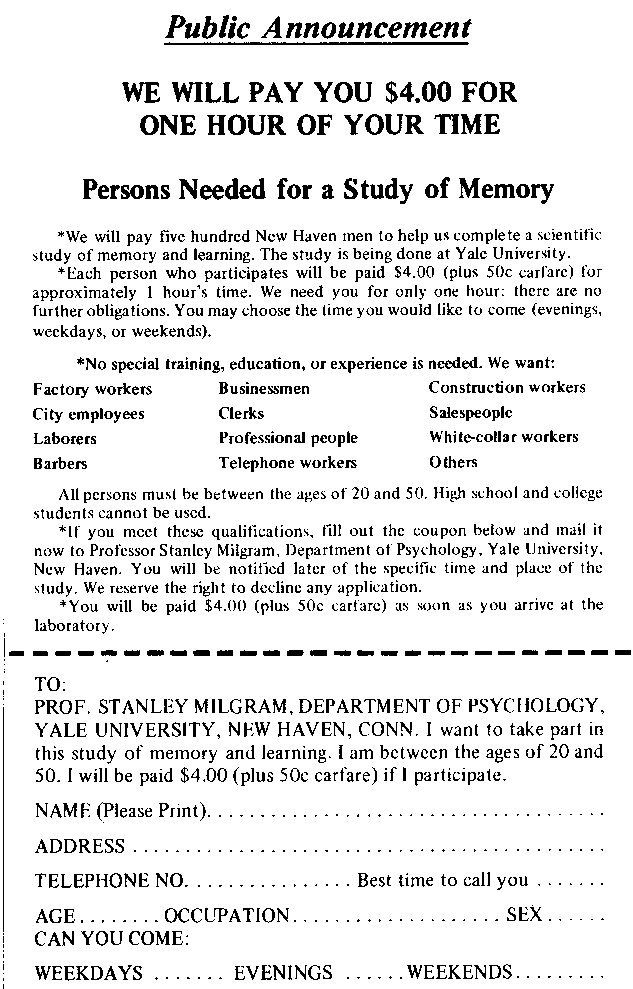
Volunteers were told to give increasing “shocks” to a learner (an actor) for wrong answers. In the best-known version, 26 of 40 participants (65%) continued to the maximum 450-volt switch ·.
A partial replication in 2009, stopping at 150 volts for ethical reasons, found 70% of participants willing to continue past that point, compared with 82.5% in Milgram’s comparable condition. The difference was not statistically significant ·.
What do the studies really show? Haslam and Reicher argue that people in these studies were not blindly obedient but identified with the experimenter’s scientific goals, which they call “engaged followership.” When the experimenter gave a direct order (“you have no other choice”), people tended to refuse ·. The Stanford Prison Experiment, often cited alongside Milgram, has been heavily criticized for coaching its “guards” ·.
Either reading is uncomfortable. If people obey, authority is dangerous. If people follow causes they believe in, then the cause, and who frames it, matters enormously. Both apply to life today.
Are we more conformist than our grandparents?
We are all unique now, just like everyone else. On several long-run measures, culture has become steadily more individualistic.
Parents increasingly choose names to make their children stand out rather than fit in. In 1955, 32% of boys and 22% of girls received one of the ten most popular names. By 2007, fewer than 10% of boys and about 1 in 12 girls did ··.
Across 78 countries over 51 years, Santos, Varnum and Grossmann found individualist practices and values rising by about 12% worldwide, driven mostly by socioeconomic development such as wealth, education and white-collar work ·.
This complicates the popular story. By many measures, we prize uniqueness more than any generation in history. The question is whether valuing individuality is the same as practicing it. Mill, Nietzsche and Taylor would all say no: you can choose a distinctive name, outfit and playlist while still letting others write your life plan.
The new crowd: feeds, influencers and belonging
A classic 1995 review concluded that the need to belong is a fundamental human motivation: people form bonds easily, resist breaking them, and suffer measurably when they lack them ·. Conformity is partly the price of belonging, and has always been.
Kierkegaard’s “crowd” was the anonymous public of newspapers and coffee houses, where responsibility becomes “a fraction” of a decision ·. Feeds create a new version: a crowd that is personalized, always present, and invisible as a crowd, because each person sees a slightly different one.
Whether algorithmic feeds make people more conformist overall is not settled. Feeds can expose people to more varied views than a small town ever did, and can also reward imitation and outrage. Good long-run measures of “conformity in the wild” do not yet exist.
A fair summary: we are probably less pressured to conform to local norms than any generation before us, and more exposed to mass norms delivered privately. Asch’s lines were visible to everyone; today’s are not.
Standing on your own: control, dependence and growing up
Do people today feel in charge of their lives? Do they rely more on institutions, parents and systems? And is adulthood arriving later, or just differently?
Locus of control, learned helplessness, self-efficacy.
Living at home, marriage, trust in institutions.
How kids grow up, and how adults work.
Who do you think is in charge of your life?
In 1966 Julian Rotter described locus of control: whether people believe outcomes depend mainly on their own actions (internal) or on luck, powerful others and circumstance (external) ·.
A meta-analysis of young Americans’ scores found locus of control became steadily more external from 1960 to 2002, by about 0.80 standard deviations. The average college student in 2002 was more external than about 80% of students in the early 1960s ·.
Seligman and Maier’s “learned helplessness” research began in the 1960s with the idea that animals exposed to uncontrollable stress learn to give up. Fifty years later, they reversed the conclusion: passivity is the brain’s default response to prolonged bad events. What is learned is control, the discovery that one’s actions matter ·.
Read together with Bandura’s self-efficacy research ·, this suggests agency is not a fixed trait but a skill built through experiences of making things happen. Frankl put it more bluntly in later editions of Man’s Search for Meaning, recommending that the Statue of Liberty on the East Coast be supplemented by a “Statue of Responsibility” on the West Coast ·.
Growing up slower: safer, and less independent
Using seven national surveys from 1976 to 2016, Twenge and Park found U.S. adolescents became less likely to take part in “adult activities” such as having a driver’s license, dating, working for pay, drinking and going out without their parents. The decline appeared across demographic groups ·.
The authors interpret this as a shift toward a “slow life strategy”: when families are smaller, lives longer and education longer, development stretches out ·. That is not obviously bad. Fewer teen births and less teen drinking are real gains.
The cost side is argued over. Some researchers and commentators link reduced independent play and travel to lower confidence and higher anxiety. Others say the evidence is mostly correlational and that today’s teens are simply safer. Both can be partly true.
If self-efficacy grows through “mastery experiences” (Bandura), then a childhood with fewer unsupervised challenges may delay the building of agency, even while it reduces harm. This is a hypothesis, not a finding.
Adulthood, rescheduled
Young adults living in their parents’ home, 1960–2025
Among men aged 25–34, the share living with parents roughly doubled, from 10.9% in 1960 to 20.4% in 2019. It jumped to 22.0% in 2020 and was 19.2% in 2025. For women 25–34 it went from 7.4% to 13.6% ·.
In July 2020, 52% of 18- to 29-year-olds lived with a parent, the highest share Pew could find in the data, above the 48% of the 1940 census, at the end of the Great Depression ·.
Living at home and marrying later (median first marriage now about 31 for men and 28 for women ·) are often read as proof of a less independent generation. They are just as consistent with longer education, higher housing costs and a deliberate choice to delay. The data show timing has changed; they cannot show character has.
Who do we lean on? Trust in government and in each other
“Generally speaking, would you say most people can be trusted?”
A measurement warning. In 2021 the GSS moved mostly online and by mail because in-person interviews were not possible. NORC cautions that changes after 2018 may partly reflect the new method, not only real change ·. The 2022 and 2024 readings, also mixed-mode, stay low, which suggests the decline is at least partly real.
Kant warned that people would happily outsource their thinking “if only I can pay” ·. A society can depend heavily on institutions while trusting them very little, which may be the most uncomfortable combination of all: reliance without confidence.
Engaged, or just employed?
U.S. employees “engaged” at work, 2000–2026
Gallup’s measure of employees who are involved in and enthusiastic about their work climbed for two decades to a record 36% in 2020, then fell. In the third quarter of 2026 it dropped to 29%, the lowest since 2011, with the sharpest declines among remote and hybrid workers ·.
About 7% of paid U.S. workdays were done from home in 2019. The share peaked around 60% in spring 2020 and has settled near 25%, about 3.5 times the pre-2020 level ·.
Remote work is a striking gain in autonomy over where and when people work. Engagement measures whether people feel connected to what they do and who they do it with. The data suggest the two do not automatically rise together.
What makes a life go well? Philosophy meets the data
For two millennia the question belonged to philosophers. In the last eighty years researchers have started measuring it: who flourishes, who lives longer, who feels their life means something.
Autonomy, competence, relatedness.
An 85-year study’s main finding.
Linked to longer life, but which way does it run?
What the philosophers claimed, and what researchers later found
| Thinker | The philosophical claim Interpretation | What later research found | Strength |
|---|---|---|---|
| Aristotle | Flourishing is an activity, practiced among friends and fellow citizens. | The Harvard Study: relationship quality at 50 predicted health at 80 better than cholesterol. → | Evidence |
| Locke · Mill | People should author their own lives; individuality is worth protecting. | Self-determination theory: autonomy is a basic psychological need linked to well-being. → | Evidence |
| Kierkegaard · Fromm | People flee into the crowd, losing themselves to escape anxiety. | Asch: real conformity pressure, but most answers stayed independent. Belonging is a fundamental need. → | Evidence |
| Nietzsche | Create your own values; “become what you are.” | Global individualism has risen, but whether people examine their values is hard to measure. → | Contested |
| Frankl | Meaning is the primary human drive, even in suffering. | Higher purpose is associated with lower mortality in large long-term studies. → | Evidence |
| Bandura | People are contributors to their life circumstances. | Young Americans became more “external” in locus of control from 1960 to 2002. → | Evidence |
| Taylor | Authenticity needs horizons of significance beyond the self. | In 14 of 17 rich countries, family is the most-cited source of meaning. → | Evidence |
The match is striking but imperfect. Research tends to confirm the philosophers’ positive claims (relationships, autonomy and purpose matter) more clearly than their alarms (that people are sinking into the crowd). The alarms are harder to measure, which is not the same as being wrong.
Self-determination theory: three needs
Autonomy
Feeling that your actions are your own, chosen and endorsed, not controlled from outside.
Competence
Feeling effective, able to meet challenges and grow skills.
Relatedness
Feeling connected to and cared for by others, and caring for them.
Ryan and Deci’s widely cited 2000 synthesis argues that these three needs are universal and that social environments which support them foster intrinsic motivation and well-being, while controlling environments (heavy surveillance, pressure, rewards used to control) undermine them ·.
The theory gives Mill and Kierkegaard a modern vocabulary. “Living by the crowd” is low autonomy. “Ape-like imitation” is behavior driven by external regulation rather than personal endorsement. Notably, the theory does not treat autonomy as independence from others: relatedness is a need too.

What 85 years of lives say about a good one
The study followed 268 Harvard sophomores (the Grant Study) and 456 young men from Boston’s inner city (the Glueck Study) for their whole lives, and later their children. Its directors report that the people most satisfied in their relationships at age 50 were the healthiest at 80, and that relationship satisfaction was a better predictor than cholesterol levels ··.
The original samples were all male and mostly white, and the findings are associations. Close relationships may protect health, or healthier, happier people may find relationships easier. The direction of cause is not fully settled.
Aristotle called a person without friends unlikely to flourish. On this point, the longest study of adult life agrees with the oldest theory of it.
Does having a purpose help you live longer?
In a U.S. sample of 6,163 adults followed for 14 years, each standard deviation of higher purpose was associated with about a 15% lower risk of dying (hazard ratio 0.85), across all ages ·.
Among 6,985 adults over 50, those with the lowest purpose scores were 2.43 times as likely to die during follow-up as those with the highest, after adjustment ·.
These are observational studies. Illness can sap purpose, so part of the link could run backward. Researchers adjust for health at baseline, but cannot rule it out entirely.
Frankl’s claim that meaning is a basic human need · now has some support from mortality data. Nietzsche’s maxim, “if a man knows the wherefore of his existence…,” reads almost like a hypothesis these studies tested.
We are richer and freer to choose. Has that bought meaning?
Money and happiness. A 2023 “adversarial collaboration” between rival researchers found that happiness generally keeps rising with log income. The exception is the least happy 20% of people, whose happiness plateaus at around $100,000 a year ·.
Sources of meaning. In a 2021 Pew survey of 17 advanced economies, family was the most-mentioned source of meaning in 14 of them. In the U.S., only about a third as many people cited their careers as cited family. Americans also became more likely to mention freedom and independence after 2017 ·.
Poorer nations, more meaning? Across 132 nations, Oishi and Diener found residents of poorer nations reported more meaning in life, though less life satisfaction, which they linked to religiosity ·. Critics argue country-level correlations cannot tell us about individuals ·.
Too many choices? The popular idea that abundant choice paralyzes us has weak overall support: a meta-analysis of 50 experiments found an average effect close to zero (d = 0.02), though large effects appeared under specific conditions ·.
Prosperity seems to raise satisfaction more reliably than meaning. That fits Frankl’s warning about an “existential vacuum” in comfortable societies, but the evidence is suggestive, not decisive.
How we live now: happiness, loneliness, community, screens
Four long-running measures of daily life, with their sources and caveats. Several had been drifting for decades; some turned sharply in the 2010s. Pull up a chair, ideally next to another human.
Nearly fifty years of stability, then a break.
Less time together, more time alone.
Joining less, helping informally.
Happiness: nearly fifty years of stability, then a break
“Taken all together… would you say that you are very happy, pretty happy, or not too happy?”
“In general, do you find life exciting, pretty routine, or dull?”
“Very happy” stayed between about 28% and 36% from 1972 to 2018. It was 19.4% in 2021, 24.8% in 2022 and 23.4% in 2024. Among 18- to 29-year-olds it fell from 22.8% (2018) to 13.3% (2021) and 19.8% (2024) ·.
Gallup’s life ratings agree on direction: Americans’ “thriving” share hit a record 59.2% in mid-2021 and fell to 48.9% in early 2025 · and 48.0% by the end of 2025. Optimism about life in five years hit a record low in 2025 ·. The U.S. fell to 23rd in the World Happiness Report 2026, from 17th in 2013, driven by young adults ··.
The GSS changed method in 2021, and NORC warns against simple comparisons ·. But the young-adult decline was visible by 2018, before the switch, and Gallup and the World Happiness Report show the same direction with different methods.
Loneliness, friendship and time alone
U.S. adults who felt loneliness “a lot of the day yesterday”
The U.S. Surgeon General’s 2023 advisory reported that time spent with friends in person fell from about 60 minutes a day in 2003 to 20 in 2020, with the steepest decline among 15- to 24-year-olds ·.
Gallup’s daily loneliness measure eased from about 25% early in 2020 to 17% in 2023, then rose again to 21% by mid-2025. Young adults (29%) report far more than adults 65 and older (15%) ··.
An “epidemic”? A meta-analysis of 345 studies (N = 124,855) found loneliness among emerging adults rose only modestly between 1976 and 2019, and its authors argued the data did not support calling it an epidemic ·. The friendship comparison above sets a 2021 survey against a 1990 Gallup poll with different wording ·.
Bowling alone, and voting together

In 1995 Putnam noticed that between 1980 and 1993 the total number of American bowlers rose by 10% while league bowling fell by 40%: more people bowling, fewer bowling together ·. In The Upswing (2020) he and Shaylyn Romney Garrett describe a century-long “I–we–I” curve: rising community from 1900 to the 1960s, then a long decline ·.
Formal volunteering through organizations dropped sharply in 2021 and only partly recovered, and volunteers gave fewer hours. But informal helping, such as assisting neighbors, rose from 51.7% in 2019 to 54.2% in 2023 ·.
Community life has not simply vanished; it has changed form, from membership to participation. Americans join fewer organizations but voted in 2020 at a rate not seen in 120 years, and help neighbors informally more than before.
Teens and screens: what changed, and the fight over why
U.S. high-school students, 2013–2023
The case for a causal link. Jonathan Haidt argues the move to smartphone-based childhood around 2010–2015, together with declining free play, caused a large share of the rise in adolescent anxiety and depression ·.
The case for caution. Candice Odgers argues the research mostly shows small correlations, that causation has not been established, and that other explanations deserve equal attention ·.
The share of high-schoolers reporting persistent sadness or hopelessness rose from 30% in 2013 to 42% in 2021, then eased to 40% in 2023. Alcohol use fell over the same period ·. Today’s teens are, by several measures, both less reckless and less happy.
Note the timing: the teen decline began around 2013, several years before 2020. Whatever happened, it was already under way.
Did things slip faster than normal after 2020?
A common feeling is that something broke around 2020: people became more isolated, less motivated, less trusting, more passive, and the slide sped up. This part tests that hunch indicator by indicator.
2020 is used only as a dividing line in time.
Compare the post-2020 change with the trend before it.
Supports, contradicts, mixed, or too early to tell.
The hypothesis, and a fair way to test it
Since 2020, things have slipped faster than normal.The hypothesis
“Slipped” can mean many things, so we break it into measurable parts: happiness, loneliness, trust, civic participation, mental health, work, and independence in early adulthood. For each, we ask three questions:
- Was there a trend before 2020? If a measure had been falling for decades, a further fall is not necessarily “faster than normal.”
- Did the change after 2020 exceed that trend? A sharp break suggests something new; a continuation suggests an old story.
- Did it last? A spike that reverts is different from a new, lower normal.
Verdict key
Fourteen indicators, before and after 2020
Sparklines show each series; the faint line marks 2020. An asterisk means the survey changed method around 2020.
| Indicator | Before 2020 | Since 2020 | Trend | Verdict | Source |
|---|---|---|---|---|---|
| Happiness (“very happy”) | Flat: 28–36% every year, 1972–2018 | 31.5% (2018) → 19.4% (2021) → 23.4% (2024) | Supports* | ·· | |
| Young adults “very happy” (18–29) | Falling by 2018 (22.8%) | 13.3% (2021) → 19.8% (2024) | Mixed | · | |
| Optimism about life in 5 years | Rising in the 2010s | 68.3% (2020) → record low 59.2% (2025) | Supports | · | |
| Daily loneliness | No Gallup baseline before 2020 | ~25% (2020) → 17% (2023) → 21% (2025) | Too early | · | |
| Time alone | Rising since at least 2010 (young adults) | 6.1 h (2019) → 7.0 h (2020) | — | Mixed | ·· |
| Trust in other people | Slow decline: 46.6% (1972) → 33.8% (2018) | 26.2% (2022) → 24.8% (2024) | Supports* | · | |
| Trust in federal government | Long decline; 17% in 2019 | 22% (2020) → 17% (Sept 2025) | Contradicts | · | |
| Voter turnout (eligible voters) | 60.1% (2016) | 66.4% (2020, highest since 1900) → 64.3% (2024) | Contradicts | · | |
| Formal volunteering | Stable: 30.3% (2017), 30.0% (2019) | 23.2% (2021) → 28.3% (2023); fewer hours | Mixed | · | |
| Informal helping (neighbors) | 51.7% (2019) | 54.2% (2023) | Contradicts | · | |
| Religious membership | Steady fall: 70% (1999) → 50% (2018) | 47% (2020) → 45% (2023): no acceleration | Contradicts | ·· | |
| Teen sadness / hopelessness | Rising since 2013: 30% → 37% (2019) | 42% (2021) → 40% (2023) | Mixed | · | |
| Employee engagement | Rising for 20 years to 36% (2020) | 29% (Q3 2026), lowest since 2011 | Supports | · | |
| Men 25–34 living with parents | Rising: 16.4% (2010) → 20.4% (2019) | 22.0% (2020) → 19.2% (2025) | Contradicts | · |
Verdict: private life slipped; public life mostly did not
The hunch is partly right. The indicators that best support “faster than normal” are about inner and private life: how happy people say they are, whether they trust strangers, how optimistic they feel about the future, and how engaged they are at work. Several of these had been stable for decades and then broke after 2020 without fully recovering.
It is also partly wrong. Measures of public and practical life did not slide faster: voter turnout hit a 120-year high, informal helping rose, religious membership continued its pre-existing decline at the same pace, and the jump in young adults living at home reversed.
And much of the story is older than 2020. Teen distress, young-adult unhappiness, rising time alone, and falling trust in government were all under way in the 2010s or earlier. For those, 2020 looks less like the cause of a decline and more like an accelerant, or simply a point on an existing slope.
Two cautions keep this verdict modest. The GSS changed method in 2021, so the largest drops are partly uncertain ·. And six years is short; some measures may still be recovering or still sliding.
Read through the thinkers: Taylor’s “malaise” is about inner life flattening while outward freedom grows. Kierkegaard warned that losing oneself happens “quietly.” A decline that shows up in mood, trust and motivation, but not in voting or helping a neighbor, is the quiet kind.
So… what is wrong with people?
Probably less than the headline suggests, and something different from what most people assume. Here are the popular assumptions, tested, and what has stayed the same for 2,700 years. (Apologies to anyone who came here looking for ammunition for the next family dinner.)
Ten common claims, each with a verdict.
What hasn’t changed at all.
The guiding question, one more time.
Ten popular assumptions, tested
“People are more conformist than ever.”
Mostly falseAsch-type conformity fell in the U.S. after the 1950s and individualism has risen worldwide →. New, private forms of crowd pressure are harder to measure.
“Every generation thinks the next one is worse.”
TrueFrom Hesiod and Horace to surveys in 60+ countries, the feeling is constant, while people’s ratings of those around them have not fallen →.
“Nobody trusts anybody anymore.”
Largely trueTrust in other people roughly halved since 1972; trust in Washington fell from 77% to 17% →.
“Young people are less independent.”
MixedMilestones come later and teens take fewer risks, but timing is not character, and costs and education changed too →.
“We are in a loneliness epidemic.”
ContestedTime with friends fell sharply and time alone rose; measured loneliness rose more modestly →.
“Smartphones broke a generation.”
ContestedThe timing fits; causation is fiercely debated by serious researchers →.
“People used to be happier.”
Only recently trueHappiness was remarkably flat for 46 years; the break came around 2018–2021 →.
“Nobody cares about community.”
Mostly falseMembership is down, but turnout and informal helping are up →.
“Too much choice makes us miserable.”
Weak evidenceAverage choice-overload effect is close to zero →.
“Earlier generations had more purpose.”
UnknownThere is no long-run measure of purpose. Purpose clearly matters for health →, but whether it has declined is untested.
What changed, and what stayed the same
What really changed
- Options exploded. Longer lives, far more education, and the freedom to choose work, partners, beliefs and places.
- The script disappeared. Roles once inherited must now be chosen, which is liberating and demanding.
- Trust fell. In institutions and in strangers, steadily for 50 years and more sharply since 2018.
- Time together shrank. Especially for young people, and especially in person.
- Adulthood stretched out. Later marriage, longer education, more years in the family home.
- Belief in personal control weakened among young Americans from 1960 to 2002.
- Reported happiness broke from a half-century plateau, around 2018–2021.
What stayed constant
- The need to belong. It shapes conformity in every era, from the village to the feed.
- Most people resist pressure most of the time. Even in Asch’s room, most answers were independent.
- Relationships predict a good life. From Aristotle to the Harvard Study.
- Purpose matters, for well-being and apparently for longevity.
- Comfort tempts us to outsource thinking. Kant described it in 1784.
- Every generation fears the next is worse, and remembers its own youth generously.
A balanced answer to the central question. People today have more capacity to live independent, purposeful lives than any generation before them. The evidence does not show that they have become broadly more conformist. It does show weaker trust, thinner social ties, a reduced sense of personal control, and recently, lower reported happiness. The modern risk is less that society forces a script on us, and more that, with no script, it is easy to drift, adapting to whatever is in front of us, which is the passive existence the philosophers feared.
The question, one more time
The same eight statements as the start. Your earlier answer, if saved in this browser, appears under each one.
Answer the statements on the left.
Five questions the evidence suggests
- Name one choice you made because it was expected. Would you make it again? (Mill)
- Pick one hard thing to do yourself this month. Efficacy grows from mastery. (Bandura)
- Who are your 2 a.m. people? Call one this week. (Harvard Study)
- Write your “why” in one sentence. (Frankl, Nietzsche)
- Find one opinion you hold only because your feed does. (Kierkegaard)
Further watching, reading and links
For anyone whose honest answer to “are you building your life?” was “right after one more video.”
Watch
- Aristotle & Virtue Theory · CrashCourse
- John Locke · The School of Life
- John Stuart Mill: On Liberty · Academy of Ideas
- Søren Kierkegaard · The School of Life
- Nietzsche · The School of Life
- Why to Believe in Others · Viktor Frankl, 1972
- Erich Fromm interview, 1958 · The Mike Wallace Interview
- Inside the Psychologist’s Studio: Albert Bandura · APS
- The Malaise of Modernity (1/5) · Charles Taylor
- Asch conformity experiment · archival
- Milgram experiment, 1963 · archival
- What makes a good life? · Robert Waldinger, TED
- The new era of positive psychology · Martin Seligman, TED
- Promoting motivation, health and excellence · Ed Deci, TEDx
- On polarization and unity · Robert Putnam, PBS NewsHour
- Health risks of loneliness · Surgeon General, PBS NewsHour
- iGen: the smartphone generation · Jean Twenge, TEDx
Read the originals
Sources, in order of first citation
Click any numbered chip in the text to see its source. Where a figure was computed for this piece from public microdata, the source entry says so.
- [1]NORC at the University of Chicago, General Social Survey 1972–2024 Cumulative File (release 3). Shares computed for this piece with the WTSSPS weight; questions HAPPY, TRUST, LIFE. gss.norc.org ↗
- [2]Dimitri, Effland & Conklin, The 20th Century Transformation of U.S. Agriculture and Farm Policy, USDA ERS EIB-3 (2005). ers.usda.gov ↗
- [3]NCHS, Death rates and life expectancy at birth, 1900–2018 (data.cdc.gov dataset w9j2-ggv5). data.cdc.gov ↗
- [4]NCHS Data Brief No. 548, Mortality in the United States, 2024 (Jan. 2026). Life expectancy 79.0 years. cdc.gov ↗
- [5]U.S. Census Bureau, Highest Educational Levels Reached by Adults in the U.S. Since 1940 (press release, Mar. 30, 2017). census.gov ↗
- [6]U.S. Census Bureau, Educational Attainment in the United States: 2025 tip sheet (Oct. 28, 2026). census.gov ↗
- [7]Taylor, The Ethics of Authenticity (Harvard University Press, 1992); first published in Canada as The Malaise of Modernity (House of Anansi, 1991; CBC Massey Lectures). hup.harvard.edu ↗
- [8]Varga & Guignon, “Authenticity,” Stanford Encyclopedia of Philosophy (discusses Taylor). plato.stanford.edu ↗
- [9]Hesiod, Works and Days, lines 109–201 (the “five ages”), trans. H. G. Evelyn-White (Project Gutenberg). gutenberg.org ↗
- [10]Horace, Odes III.6, lines 45–48 (c. 23 BCE), Latin text at The Latin Library. thelatinlibrary.com ↗
- [11]Quote Investigator, “Misbehaving Children in Ancient Times” (traces the “Socrates” quote to Kenneth Freeman’s 1907 dissertation). quoteinvestigator.com ↗
- [12]Snopes, “Did Aristotle Say ‘We Are What We Repeatedly Do’?” (attributes the line to Will Durant, 1926). snopes.com ↗
- [13]Protzko & Schooler, “Kids these days: Why the youth of today seem lacking,” Science Advances 5(10) (2019). science.org ↗
- [14]Mastroianni & Gilbert, “The illusion of moral decline,” Nature 618, 782–789 (2023). nature.com ↗
- [15]Kant, An Answer to the Question: What is Enlightenment? (1784), trans. Ted Humphrey (Hackett, 1992). nypl.org ↗
- [16]CDC MMWR QuickStats, Life Expectancy at Birth, by Sex — United States, 2019–2022 (2024). cdc.gov ↗
- [17]U.S. Census Bureau, Table MS-2, Estimated Median Age at First Marriage, by Sex: 1890 to Present (CPS ASEC 2025). census.gov ↗
- [18]Riesman (with Glazer & Denney), The Lonely Crowd: A Study of the Changing American Character (Yale University Press, 1950). yalebooks.yale.edu ↗
- [19]Whyte, The Organization Man (Simon & Schuster, 1956; reissued University of Pennsylvania Press, 2002). pennpress.org ↗
- [20]Pew Research Center, Public Trust in Government: 1958–2025 (Dec. 4, 2025). Sources: NES, Pew, Gallup, ABC/WaPo, CBS/NYT, CNN. pewresearch.org ↗
- [21]Wolfe, “The ‘Me’ Decade and the Third Great Awakening,” New York magazine (Aug. 23, 1976). nymag.com ↗
- [22]Putnam, “Bowling Alone: America’s Declining Social Capital,” Journal of Democracy 6(1), 65–78 (1995). doi.org ↗
- [23]Pew Research Center, Mobile Fact Sheet (smartphone ownership 35% in 2011; 91% in the latest survey). pewresearch.org ↗
- [24]Office of the U.S. Surgeon General, Our Epidemic of Loneliness and Isolation (2023). hhs.gov ↗
- [25]CDC, Youth Risk Behavior Survey Data Summary & Trends Report: 2013–2023 (2024). cdc.gov ↗
- [26]Herre & Acisu, “Young Americans spend much more time alone than they did fifteen years ago,” Our World in Data (May 30, 2025), from the American Time Use Survey. ourworldindata.org ↗
- [27]Haidt, The Anxious Generation (Penguin Press, 2024). anxiousgeneration.com ↗
- [28]Odgers, “The great rewiring: is social media really behind an epidemic of teenage mental illness?” Nature 628, 29–30 (2024). nature.com ↗
- [29]Aristotle, Nicomachean Ethics, trans. D. P. Chase (Project Gutenberg). gutenberg.org ↗
- [30]Kraut, “Aristotle’s Ethics,” Stanford Encyclopedia of Philosophy. plato.stanford.edu ↗
- [31]Locke, Second Treatise of Government (1689), §27 (Project Gutenberg). gutenberg.org ↗
- [32]Uzgalis, “John Locke,” Stanford Encyclopedia of Philosophy (incl. personal identity). plato.stanford.edu ↗
- [33]Tuckness, “Locke’s Political Philosophy,” Stanford Encyclopedia of Philosophy. plato.stanford.edu ↗
- [34]Mill, On Liberty (1859), ch. 3, “Of Individuality” (Project Gutenberg). gutenberg.org ↗
- [35]Macleod, “John Stuart Mill,” Stanford Encyclopedia of Philosophy. plato.stanford.edu ↗
- [36]Kierkegaard, “On the Dedication to ‘That Single Individual’” (1846–47; publ. 1859), trans. C. K. Bellinger (CCEL). ccel.org ↗
- [37]McDonald, “Søren Kierkegaard,” Stanford Encyclopedia of Philosophy. plato.stanford.edu ↗
- [38]Kierkegaard, The Sickness Unto Death (1849), trans. Walter Lowrie (Princeton University Press, 1941), part I, ch. 3 (online text at Religion Online). religion-online.org ↗
- [39]Nietzsche, Twilight of the Idols (1889), “Maxims and Arrows” §12, trans. A. M. Ludovici (Project Gutenberg). gutenberg.org ↗
- [40]Anderson, “Friedrich Nietzsche,” Stanford Encyclopedia of Philosophy. plato.stanford.edu ↗
- [41]Nietzsche, The Joyful Wisdom / The Gay Science (1882), §270, trans. T. Common (Project Gutenberg). gutenberg.org ↗
- [42]Frankl, Man’s Search for Meaning (1946; English ed. Beacon Press). The “last of the human freedoms” passage; the “Statue of Responsibility” line is in the logotherapy section added to later editions. beacon.org ↗
- [43]Viktor Frankl Institut, Vienna — biography and chronology. viktorfrankl.org ↗
- [44]Quote Investigator, “Between Stimulus and Response There Is a Space” (2018). quoteinvestigator.com ↗
- [45]Fromm, Escape from Freedom (1941), ch. V, “Mechanisms of Escape” (excerpt). panarchy.org ↗
- [46]The Mike Wallace Interview: Erich Fromm (May 25, 1958), Harry Ransom Center collection. hrc.contentdm.oclc.org ↗
- [47]Bandura, “Toward a Psychology of Human Agency,” Perspectives on Psychological Science 1(2), 164–180 (2006). doi.org ↗
- [48]Bandura, Ross & Ross, “Transmission of aggression through imitation of aggressive models,” Journal of Abnormal and Social Psychology 63(3), 575–582 (1961). doi.org ↗
- [49]Bandura, “Self-efficacy: Toward a unifying theory of behavioral change,” Psychological Review 84(2), 191–215 (1977). doi.org ↗
- [50]Asch, “Studies of independence and conformity: I. A minority of one against a unanimous majority,” Psychological Monographs 70(9) (1956). doi.org ↗
- [51]Bond & Smith, “Culture and conformity: A meta-analysis of studies using Asch’s line judgment task,” Psychological Bulletin 119(1), 111–137 (1996). doi.org ↗
- [52]Milgram, “Behavioral Study of Obedience,” Journal of Abnormal and Social Psychology 67(4), 371–378 (1963). doi.org ↗
- [53]Burger, “Replicating Milgram: Would people still obey today?” American Psychologist 64(1), 1–11 (2009). doi.org ↗
- [54]Haslam & Reicher, “Contesting the ‘nature’ of conformity: What Milgram and Zimbardo’s studies really show,” PLOS Biology 10(11) (2012). doi.org ↗
- [55]Le Texier, “Debunking the Stanford Prison Experiment,” American Psychologist 74(7), 823–839 (2019). doi.org ↗
- [56]Twenge, Abebe & Campbell, “Fitting In or Standing Out: Trends in American Parents’ Choices for Children’s Names, 1880–2007,” Social Psychological and Personality Science 1(1), 19–25 (2010). doi.org ↗
- [57]San Diego State University News, “Unique Baby Names Not Just a Celebrity Fad” (May 20, 2009) — summary of the names study. sdsu.edu ↗
- [58]Greenfield, “The Changing Psychology of Culture From 1800 Through 2000,” Psychological Science 24(9), 1722–1731 (2013). doi.org ↗
- [59]Santos, Varnum & Grossmann, “Global Increases in Individualism,” Psychological Science 28(9), 1228–1239 (2017). doi.org ↗
- [60]Pew Research Center, America’s News Influencers / “Who gets news from news influencers” (Nov. 18, 2024). pewresearch.org ↗
- [61]Baumeister & Leary, “The need to belong,” Psychological Bulletin 117(3), 497–529 (1995). doi.org ↗
- [62]Rotter, “Generalized expectancies for internal versus external control of reinforcement,” Psychological Monographs 80(1) (1966). doi.org ↗
- [63]Twenge, Zhang & Im, “It’s Beyond My Control: A Cross-Temporal Meta-Analysis of Increasing Externality in Locus of Control, 1960–2002,” Personality and Social Psychology Review 8(3), 308–319 (2004). doi.org ↗
- [64]Maier & Seligman, “Learned helplessness at fifty: Insights from neuroscience,” Psychological Review 123(4), 349–367 (2016). pmc.ncbi.nlm.nih.gov ↗
- [65]McDonald et al., “U.S. School Travel, 2009: An Assessment of Trends,” American Journal of Preventive Medicine 41(2), 146–151 (2011). doi.org ↗
- [66]Osterman, Hamilton, Martin et al., Births: Final Data for 2024, National Vital Statistics Reports 75(2), NCHS (2026). Teen birth rate 12.6 per 1,000, down from 61.8 in 1991. ncbi.nlm.nih.gov ↗
- [67]Twenge & Park, “The Decline in Adult Activities Among U.S. Adolescents, 1976–2016,” Child Development 90(2), 638–654 (2019). doi.org ↗
- [68]U.S. Census Bureau, Table AD-1, Young Adults, 18–34 Years Old, Living at Home: 1960 to Present (CPS ASEC 2025). census.gov ↗
- [69]Fry, Passel & Cohn, A majority of young adults in the U.S. live with their parents for the first time since the Great Depression, Pew Research Center (Sept. 4, 2020). pewresearch.org ↗
- [70]NORC, 2021 GSS Cross-section Methodological Primer — explains the 2021 switch to web/mail and cautions on comparing with earlier years. gss.norc.org ↗
- [71]Harter, “U.S. Employee Engagement Below 30% for First Time in 15 Years,” Gallup (Oct. 28, 2026). gallup.com ↗
- [72]Barrero, Bloom, Davis et al., Why Working from Home Will Stick (WFH Research, Oct. 2026 version). About 25% of paid workdays from home in 2025, ~3.5× 2019. wfhresearch.com ↗
- [73]Ryan & Deci, “Self-determination theory and the facilitation of intrinsic motivation, social development, and well-being,” American Psychologist 55(1), 68–78 (2000). doi.org ↗
- [74]Harvard Study of Adult Development — the Grant and Glueck studies. adultdevelopmentstudy.org ↗
- [75]Mineo, “Over nearly 80 years, Harvard study has been showing how to live a healthy and happy life,” Harvard Gazette (Apr. 11, 2017). news.harvard.edu ↗
- [76]Alimujiang et al., “Association Between Life Purpose and Mortality Among US Adults Older Than 50 Years,” JAMA Network Open 2(5) (2019). jamanetwork.com ↗
- [77]Hill & Turiano, “Purpose in Life as a Predictor of Mortality Across Adulthood,” Psychological Science 25(7), 1482–1486 (2014). pmc.ncbi.nlm.nih.gov ↗
- [78]Killingsworth, Kahneman & Mellers, “Income and emotional well-being: A conflict resolved,” PNAS 120(10) (2023). pnas.org ↗
- [79]Silver et al., What Makes Life Meaningful? Views From 17 Advanced Economies, Pew Research Center (Nov. 18, 2021). pewresearch.org ↗
- [80]Oishi & Diener, “Residents of poor nations have a greater sense of meaning in life than residents of wealthy nations,” Psychological Science 25(2), 422–430 (2014). pubmed.ncbi.nlm.nih.gov ↗
- [81]Kuppens & Pollet, “Mind the level: problems with two recent nation-level analyses in psychology,” Frontiers in Psychology (2014). pmc.ncbi.nlm.nih.gov ↗
- [82]Scheibehenne, Greifeneder & Todd, “Can There Ever Be Too Many Options? A Meta-Analytic Review of Choice Overload,” Journal of Consumer Research 37(3), 409–425 (2010). doi.org ↗
- [83]Gallup, “Americans’ Life Ratings Slump to Five-Year Low” (Apr. 2025). news.gallup.com ↗
- [84]Gallup, “American Optimism Slumps to Record Low” (Feb. 10, 2026) — current and future life ratings, 2009–2025; thriving 48.0% in Q4 2025. news.gallup.com ↗
- [85]Gallup, “Happiness Rankings Show Stability and Change” (Mar. 2026) — U.S. fell from 17th (2013) to 23rd. news.gallup.com ↗
- [86]World Happiness Report 2026, press release (Mar. 2026). worldhappiness.report ↗
- [87]Gallup, “U.S. Depression Rate Remains Historically High” (2025) — includes the daily loneliness series, Mar. 2020–Jun. 2025. news.gallup.com ↗
- [88]James & Witters, “Daily Loneliness Afflicts One in Five in U.S.,” Gallup (2024). Notes Gallup has no pre-2020 baseline. news.gallup.com ↗
- [89]U.S. Bureau of Labor Statistics, “Time spent alone increased by an hour per day in 2020,” The Economics Daily (Aug. 27, 2021). bls.gov ↗
- [90]Cox, The State of American Friendship: Change, Challenges, and Loss, Survey Center on American Life (2021). americansurveycenter.org ↗
- [91]Buecker et al., “Is loneliness in emerging adults increasing over time? A preregistered cross-temporal meta-analysis and systematic review,” Psychological Bulletin 147(8), 787–805 (2021). doi.org ↗
- [92]Putnam & Garrett, The Upswing: How America Came Together a Century Ago and How We Can Do It Again (Simon & Schuster, 2020). simonandschuster.com ↗
- [93]Jones, “U.S. Church Membership Falls Below Majority for First Time,” Gallup (Mar. 29, 2021). news.gallup.com ↗
- [94]Gallup, “How Religious Are Americans?” (2024) — 45% church membership in 2023. news.gallup.com ↗
- [95]Schlachter & Marshall, “New U.S. Census Bureau and AmeriCorps Research Tracks Virtual Volunteering for First Time,” U.S. Census Bureau (Nov. 19, 2024). census.gov ↗
- [96]McDonald, University of Florida Election Lab, National VEP Turnout Rates, 1789–Present (v1.4, Mar. 2, 2026): 60.1% (2016), 66.4% (2020), 64.3% (2024). election.lab.ufl.edu ↗
Image and media credits, and about this piece
Images
All images are hosted with this page and come from Wikimedia Commons. Public-domain works are free to reuse; Creative Commons images are used under the license shown, which applies to the original file. Some images were resized or cropped.
 Caspar David Friedrich - Wanderer above the sea of fog
Caspar David Friedrich · Public domain · Wikimedia Commons ↗- Pieter Bruegel the Elder- The Harvesters - Google Art Project
Pieter Bruegel the Elder · Public domain · Wikimedia Commons ↗  Raphael School of Athens
Raphael · Public domain · Wikimedia Commons ↗- Breaker Boys 1
Lewis Hine · Public domain · Wikimedia Commons ↗ - Assembly line at the Ford Motor Company's Highland Park plant LCCN2011661021
Library of Congress · Public domain · Wikimedia Commons ↗ - Automat-edward-hopper-1927
Edward Hopper · Public domain · Wikimedia Commons ↗ - Lange-MigrantMother02
Dorothea Lange · Public domain · Wikimedia Commons ↗ - DSC 6225 Crowd capturing the night sky with smartphones lights and bokeh glowing in the background
PattayaPatrol · CC BY-SA 4.0 · Wikimedia Commons ↗  Empty Praça do Comércio during the COVID-19 lockdown, Lisbon, Portugal julesvernex2-2
Jules Verne Times Two · CC BY-SA 4.0 · Wikimedia Commons ↗- Aristotle Altemps Inv8575
After Lysippos · Public domain · Wikimedia Commons ↗ - Godfrey Kneller - Portrait of John Locke (Hermitage)
Godfrey Kneller · Public domain · Wikimedia Commons ↗ - John-stuart-mill-sized
Photogravure after John & Charles Watkins · Public domain · Wikimedia Commons ↗ - Kierkegaard portrait
Luplau Janssen · Public domain · Wikimedia Commons ↗ - Nietzsche1882
Gustav-Adolf Schultze · Public domain · Wikimedia Commons ↗ - Viktor Frankl2
Prof. Dr. Franz Vesely · CC BY-SA 3.0 de · Wikimedia Commons ↗ - Erich Fromm 1974 (cropped)
Müller-May · CC BY-SA 3.0 de · Wikimedia Commons ↗ - Albert Bandura Psychologist (headshot)
Photo courtesy of Albert Bandura · CC BY-SA 4.0 · Wikimedia Commons ↗ - Charles Taylor in 2019 (4x5 cropped)
Lëa-Kim Châteauneuf · CC BY-SA 4.0 · Wikimedia Commons ↗ - Milgram Experiment advertising
Recruitment advertisement for the Yale obedience study · Public domain · Wikimedia Commons ↗ - Professor RobertDPutnam (cropped)
Ford School of Public Policy · CC BY 3.0 · Wikimedia Commons ↗ - Edward L Deci
Center for Self-Determination Theory · CC BY-SA 4.0 · Wikimedia Commons ↗
Video
Videos are embedded from YouTube in privacy-enhanced mode (youtube-nocookie.com) and load only when their page is open. They remain the property of their creators and channels: CrashCourse, The School of Life, Academy of Ideas, TED and TEDx, PBS NewsHour, the Association for Psychological Science, and archival uploads of historical recordings.
Typefaces
Fraunces, Source Serif 4, Inter and JetBrains Mono, all under the SIL Open Font License and served with this page.
About this piece
Data. Charts use published figures from the U.S. Census Bureau, NCHS/CDC, Pew Research Center, Gallup and others, as cited. General Social Survey figures were tabulated from the NORC 1972–2024 cumulative file using its recommended weight; the trust-in-government line is the annual average of Pew’s compiled series.
Labels. Evidence, interpretation, contested claims and analysis are marked separately so readers can weigh them independently.
Quotations were checked against published translations; misattributed lines are flagged where they appear.
Scope. Most long-run measures are U.S. data. Figures current as of November 2026.
Your self-audit answers and notes are stored only in your own browser and never leave your device.